Iron deficiency: symptoms, causes and how to fix it
Fatigue, paleness, breathlessness: could it be iron? Symptoms, at-risk profiles, best food sources and how to boost absorption. Evidence-based.
Key takeaways
- Iron deficiency is the most common nutritional deficiency in the world, especially in women.
- Typical signs: persistent fatigue, paleness, breathlessness, brittle nails, hair loss.
- Heme iron (meat, fish) is absorbed far better than non-heme iron (plants).
- Vitamin C boosts absorption; tea, coffee and calcium at the same meal hinder it.
Constantly tired, short of breath when exerting, paler than usual? Before blaming stress, there's a very common cause to rule out: low iron. It's the number-one nutritional deficiency on the planet, and it mainly affects women. Here's how to spot it, who's at risk, and how to fix it through food.
What iron does
Iron is the central component of haemoglobin, the red-blood-cell protein that carries oxygen from your lungs to all your organs and muscles. Without enough iron, this oxygen transport is impaired: hence fatigue, breathlessness and reduced performance. Iron is also involved in cellular energy production and immune function (Pasricha et al., Lancet 2021).
Symptoms to recognise
- •Persistent fatigue that rest doesn't fix.
- •Paleness (skin, inner eyelids).
- •Breathlessness and palpitations on exertion.
- •Brittle nails, more hair shedding than usual.
- •Trouble concentrating, feeling cold, restless legs.
Deficiency ≠ anaemia
You can be low on iron (depleted stores, falling ferritin) well before becoming anaemic. Fatigue can appear while the “haemoglobin” blood test is still normal. The right marker for stores is ferritin.
Who is most at risk?
Some profiles have higher needs or greater losses: menstruating women (monthly iron loss), pregnant women, vegetarians and vegans (plant iron is less absorbable), endurance athletes (increased losses, haemolysis), growing teenagers, and people with digestive bleeding or regular blood donation. If you tick one of these boxes and feel drained, iron is a serious lead.
Heme vs non-heme iron
Not all dietary iron is equal. Heme iron, found in meat, poultry and fish, is absorbed at 15 to 35 %. Non-heme iron, found in plants (legumes, whole grains, leafy greens), is only absorbed at 2 to 20 %, and its absorption strongly depends on what accompanies it (Hurrell & Egli, 2010). That's why vegetarians should aim higher and pay attention to food pairings.
| Food | Iron type | Strength |
|---|---|---|
| Blood sausage, liver | Heme | Very rich, well absorbed |
| Red meat | Heme | Good bioavailability |
| Clams, mussels, sardines | Heme | Rich + omega-3 |
| Lentils, chickpeas, beans | Non-heme | Fibre + protein |
| Tofu, pumpkin seeds | Non-heme | Dense plant option |
| Spinach, leafy greens | Non-heme | Pair with vitamin C |
Optimising absorption
A few simple habits double your meals' effectiveness. Pair a vitamin-C source (bell pepper, citrus, kiwi, parsley) with iron-rich plant meals: it strongly increases non-heme iron absorption. Conversely, keep tea, coffee and calcium supplements away from iron-rich meals (tannins and calcium hinder absorption). Eating a little meat or fish with plants also improves absorption of the plant iron in the same meal.
The winning combo
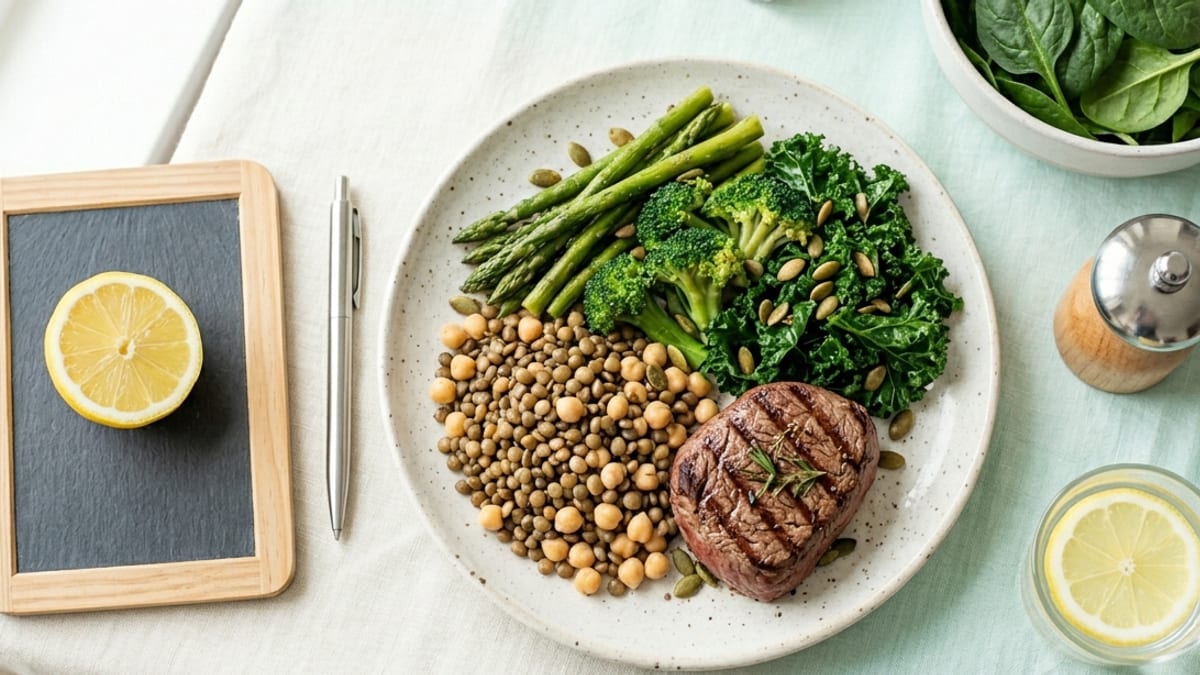
Lentils + red pepper + a squeeze of lemon = plant iron + vitamin C. Save the tea for 1–2 h after the meal, not during.
When to see a doctor (and not supplement blindly)
If symptoms persist, the right move is a blood test including ferritin (a reflection of stores), prescribed by a doctor. Important: don't supplement iron without biological confirmation. Iron excess is toxic (the body has no efficient way to remove it), and supplements have digestive side effects. Supplementation should be medically supervised, at the right dose, with follow-up. Food remains the first line to prevent and correct mild deficiency.
Tracking your daily iron intake helps spot a poor diet before it creates a deficiency. That's exactly what micronutrient tracking enables: seeing, meal after meal, whether you cover your needs, and adjusting with the right foods.
Frequently asked questions
Are spinach really rich in iron?
They contain some, but it's poorly absorbed non-heme iron, and their oxalates further hinder absorption. A useful add-on when paired with vitamin C, but far from the “Popeye” myth.
Are vegetarians necessarily deficient?
No, but they should aim for higher intakes and pay attention to pairings (vitamin C, avoid tea/coffee at meals). Regular ferritin monitoring is recommended, especially for women.
How much iron per day?
ANSES references put the need around 11 mg/day for men and up to 16 mg/day for menstruating women (higher with heavy periods or pregnancy). Vegetarians aim higher due to lower absorption.
Does coffee really cancel out iron?
It doesn't cancel it but markedly reduces non-heme iron absorption if drunk with the meal. Shifting it by one to two hours is enough to limit the effect.
Scientific sources
Track your nutrition the easy way
DIAT scans your meals and computes your calories, macros and 27 micronutrients. Staying in a deficit gets simple.
Get started free