
5 mistakes that throw off your calorie tracking
Tracking but nothing's moving? Here are the 5 most common mistakes that sabotage calorie tracking, and how to fix them. Evidence-based.
Key takeaways
- “I count but I'm not losing” almost always comes from incomplete tracking, not a “broken” metabolism.
- Cooking oils and fats are mistake number one: very calorie-dense, often forgotten.
- Drinks (juice, soda, alcohol, milk in coffee) count and are easily forgotten.
- Studies show massive under-reporting of real intake (Lichtman et al., 1992).
You're tracking your calories seriously, the scale isn't moving, and you start to think your body is “different.” In the vast majority of cases, the problem isn't physiological: the tracking is leaking somewhere. A famous study (Lichtman et al., 1992) showed that people convinced they ate little under-estimated their intake by nearly half. Here are the 5 most common leaks, and how to plug them.
1. Forgetting oil and cooking fats
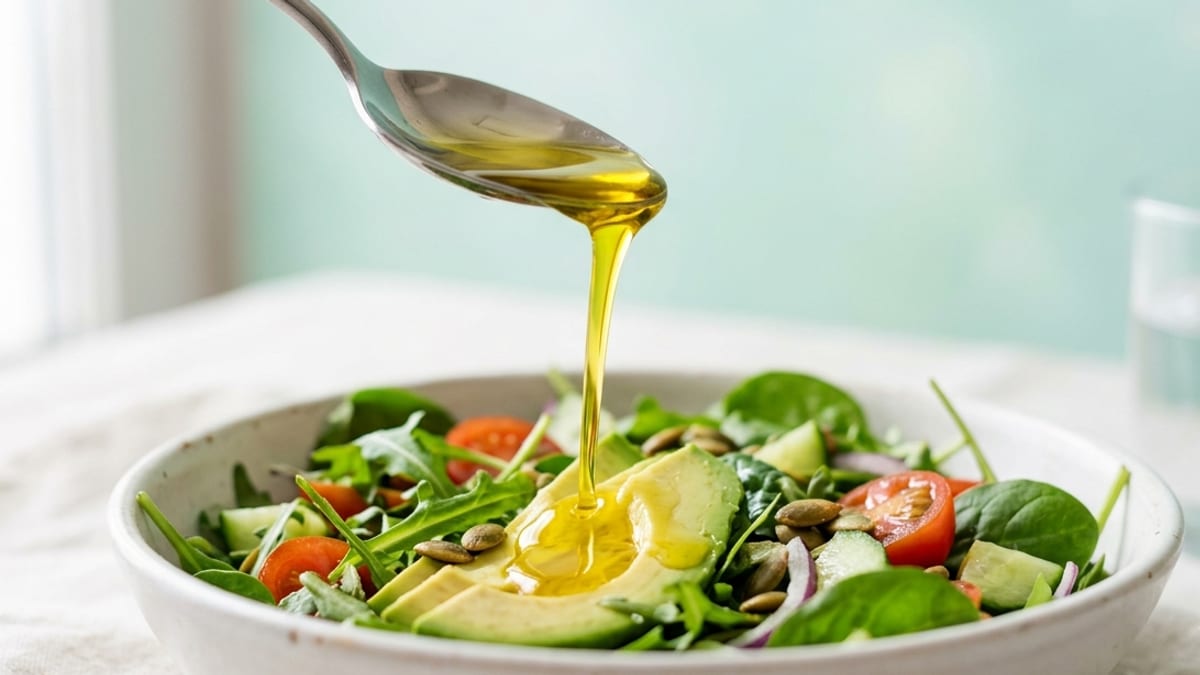
The reigning mistake. A tablespoon of oil is about 90 to 100 kcal, and people often add two or three without thinking. Butter for cooking, a drizzle on the salad, the bottom of the pan: these “invisible” fats can add 200 to 400 kcal a day. Always weigh or measure oil and butter, it's the single habit that changes the most tallies.
2. Not counting drinks
Liquid calories are sneaky because they barely fill you up. A fruit juice, a soda, a beer, a latte, or even the milk and sugar in several coffees a day add up fast. Alcohol is especially tricky (7 kcal/g, and it stimulates appetite). Log everything that isn't water, tea or black coffee.
3. Underestimating portions
The human eye is a poor judge, and it almost always underestimates (Livingstone & Black, 2003). “A handful” of nuts can be 20 or 50 g, a “portion” of pasta can double depending on the plate. At first, weigh to calibrate your perception, especially on calorie-dense foods. You'll often be surprised by the gap between what you think and reality.
4. Forgetting bites and snacks
The bit of cheese while cooking, the fries snatched from the kids' plate, the square of chocolate, the spoon of spread “just to taste”… These small unlogged bites, sometimes called “amnesic snacking,” can add up to several hundred calories a day. If it goes in your mouth, it counts. Log it, even roughly.
5. Misreading the label (and raw vs cooked)
Two classic traps. First, confusing “per 100 g” and “per serving”: you log 90 kcal when you ate triple. Second, raw vs cooked: 100 g of raw pasta ≈ 350 kcal, but once cooked it weighs ~250 g for the same calories. Logging “250 g of pasta” with the raw value triples the count. Always check the reference (real portion, raw/cooked state).
The anti-leak habit
Weigh dense foods (oil, butter, cheese, nuts), log everything in the moment (drinks and bites included), and check “per 100 g” + raw/cooked. These three habits fix 90 % of tracking that “doesn't work.”
The good news: these mistakes are all easy to fix once you know them. A tool that makes logging fast (scan, barcode, photo) helps enormously, because the main cause of omissions is the hassle of logging. Less friction, fewer leaks.
Frequently asked questions
I track everything and still don't lose, is it my metabolism?
It's very rarely the metabolism. Most often there's still a leak (oils, drinks, bites, underestimated portions) or an overestimate of calories burned. Tighten tracking for 2 weeks before concluding.
Should you weigh bread, fruit, etc.?
For accuracy at first, yes. With practice, you'll estimate these moderately calorie foods well. Keep the rigour mainly for fats and very dense foods.
Do “cheat” days ruin everything?
A single big blowout can erase several days' deficit. It's not a disaster occasionally, but you must count it honestly to keep an accurate view of the week.
Scientific sources
- 1.Lichtman SW, et al. Discrepancy between self-reported and actual caloric intake in obese subjects. N Engl J Med. 1992.
- 2.Livingstone MB, Black AE. Markers of the validity of reported energy intake. J Nutr. 2003.
- 3.Schoeller DA. Limitations in the assessment of dietary energy intake by self-report. Metabolism. 1995.
Track your nutrition the easy way
DIAT scans your meals and computes your calories, macros and 27 micronutrients. Staying in a deficit gets simple.
Get started free