
Omega-3: why your omega-6 to omega-3 ratio matters so much
Omega-3 are essential for heart and brain, but the modern diet lacks them and overflows with omega-6. Roles, ratio, sources and supplementation. Evidence-based.
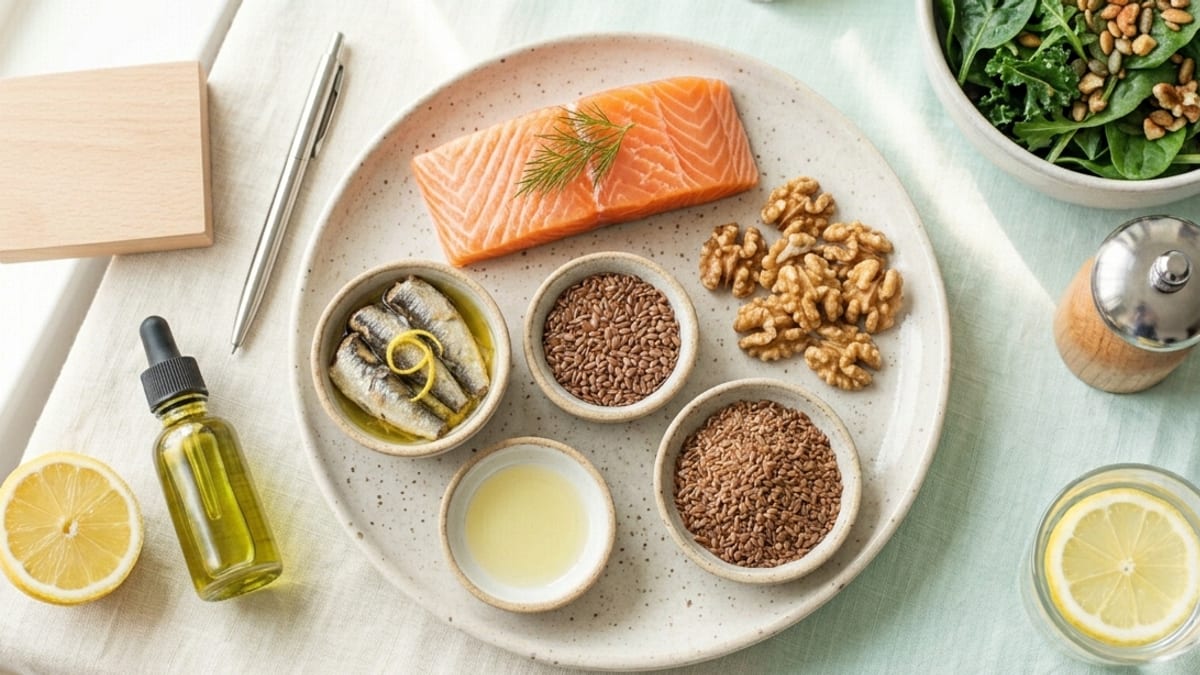
Key takeaways
- Omega-3 (EPA, DHA, ALA) are essential fats: heart, brain, inflammation regulation.
- The modern problem: too much omega-6, not enough omega-3, an unbalanced ratio.
- Fatty fish provide directly usable EPA/DHA; plant ALA converts poorly.
- Simple goal: fatty fish 2×/week, more rapeseed/walnut oil, fewer omega-6-heavy oils.
We hear a lot about omega-3, but the real issue isn't only getting enough: it's also their balance with omega-6. Our modern diet, rich in vegetable oils and processed foods, overflows with omega-6 and lacks omega-3. Yet this imbalance affects inflammation and cardiovascular health (Simopoulos, 2002). Here's how to restore the balance.
The 3 omega-3 to know
There are three main omega-3 fatty acids. EPA and DHA, mostly of marine origin, are the directly active forms: DHA is a major component of the brain and retina, EPA plays a key role in regulating inflammation (Calder, 2017). ALA, of plant origin (flax, walnuts, rapeseed), is the “precursor” form: the body can convert it into EPA and DHA, but with very low efficiency (Burdge & Wootton, 2002). Hence the importance of marine sources for EPA/DHA.
The omega-6 to omega-3 ratio
Omega-6 and omega-3 are both essential, but they use the same metabolic pathways and, in a way, compete. Omega-6 (abundant in sunflower and corn oils, and processed foods) tend to favour pro-inflammatory mediators, whereas omega-3 are rather regulatory. The ancestral diet is estimated to have had a ratio near 1:1 to 4:1, while the modern Western diet reaches 15:1 or even 20:1 (Simopoulos, 2002). Rebalancing means both increasing omega-3 and reducing excess omega-6.
The best sources
| Food | Type | Strength |
|---|---|---|
| Salmon, mackerel, sardine, herring | EPA/DHA | Directly active form |
| Cod liver oil | EPA/DHA | Very concentrated (+ vit. D) |
| Rapeseed, flaxseed oil | ALA | Good ratio, use cold |
| Walnuts, flax/chia seeds | ALA | Handy daily |
| Omega-3 enriched eggs/meat | EPA/DHA | Top-up source |
| Microalgae oil | DHA (+EPA) | Vegan EPA/DHA option |
In practice: aim for fatty fish twice a week for EPA/DHA, use rapeseed or walnut oil for dressings instead of sunflower, add nuts and seeds regularly, and limit ultra-processed foods high in omega-6. For vegans, EPA/DHA comes from a microalgae oil (flax ALA alone isn't enough).
The move that shifts the ratio
Swapping sunflower oil for rapeseed oil in dressings, and eating fatty fish 2×/week: two simple habits that tip the ratio the right way.
Do you need a supplement?
If you eat fatty fish regularly, food is usually enough. An omega-3 supplement (fish oil, or algae oil for vegans) is useful for those who don't, for vegans, or on medical advice in certain situations. Choose a product standardised in EPA/DHA and kept away from light (omega-3 oxidise easily). As always, regular intake beats an occasional megadose.
Tracking your omega-3 intake (and keeping an eye on omega-6-heavy oils) helps visualise a ratio that's often invisible on the plate. That's one of the benefits of daily micronutrient and fat tracking.
The best food sources of omega-3
All foodsPer 100 g, from the ANSES-Ciqual food composition table. Each row opens the full food page.
Recipes rich in omega-3
All recipesRanked by amount per serving, from the DIAT recipes.


Frequently asked questions
Is flaxseed enough for omega-3?
They provide ALA, but its conversion to EPA/DHA is very low (a few percent). For EPA/DHA you need fatty fish or, for vegans, a microalgae oil.
Which oil for cooking and dressing?
For cold dressing: rapeseed or walnut (good omega-3 ratio). For cooking: olive. Avoid overusing sunflower/corn oils, very high in omega-6.
Fish oil or algae oil?
Both provide EPA/DHA. Algae oil is the vegan option (fish actually get their omega-3 from algae). Check the real EPA/DHA content, not just the amount of oil.
Is too much omega-3 risky?
At usual dietary and supplement doses, no. At very high doses, there can be a blood-thinning effect: caution if you take anticoagulants, seek medical advice.
Scientific sources
- 1.Simopoulos AP. The importance of the ratio of omega-6/omega-3 essential fatty acids. Biomed Pharmacother. 2002.
- 2.Calder PC. Omega-3 fatty acids and inflammatory processes: from molecules to man. Biochem Soc Trans. 2017.
- 3.Burdge GC, Wootton SA. Conversion of alpha-linolenic acid to EPA and DHA in young women. Br J Nutr. 2002.
- 4.ANSES. Références nutritionnelles en acides gras (oméga-3).
Track your nutrition the easy way
DIAT scans your meals and computes your calories, macros and 27 micronutrients. Staying in a deficit gets simple.
Get started free